
Alpharetta Concrete Driveway Maintenance: Climate-Smart Care Guide
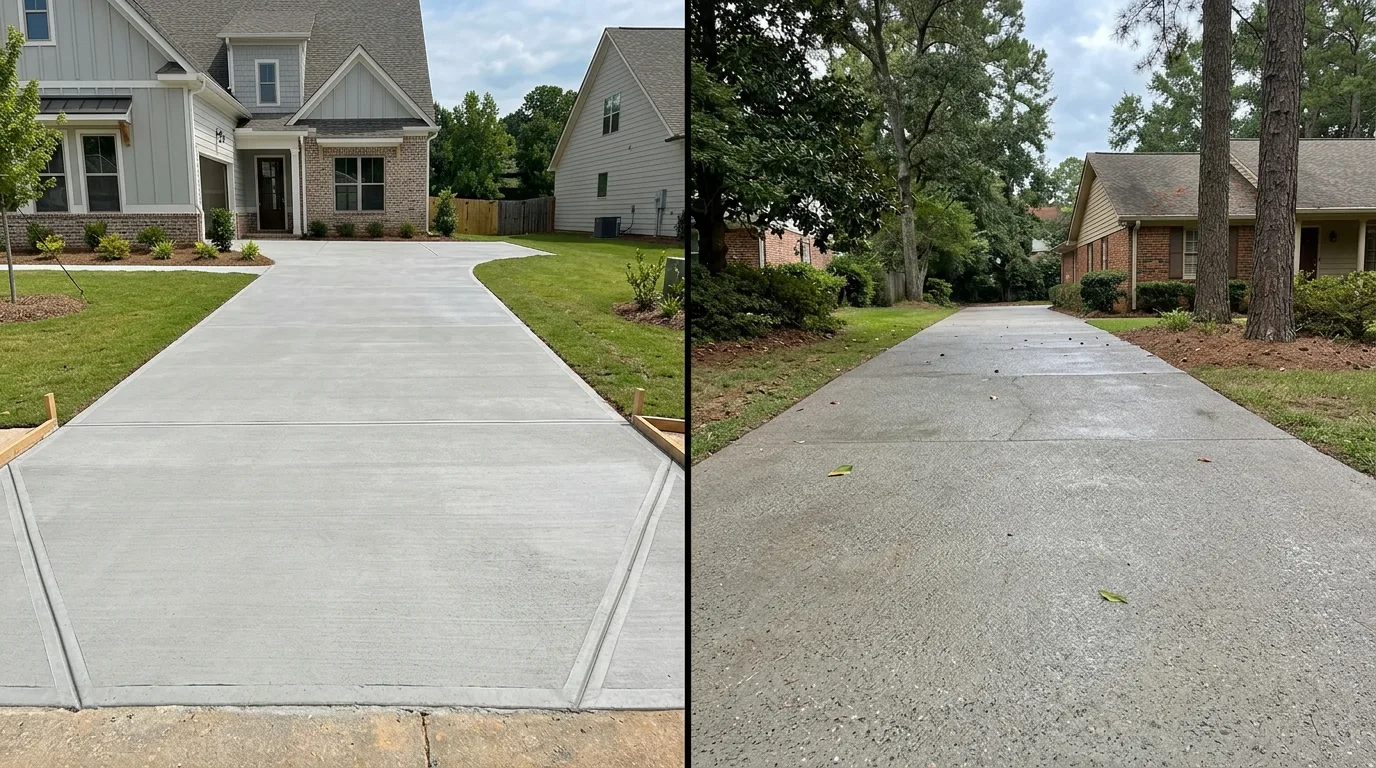
A concrete driveway in Alpharetta is an investment that should last 25–50 years. Whether it actually reaches that lifespan depends less on the installation alone and more on what happens in the months and years afterward. Alpharetta’s clay soil and climate create a specific maintenance environment that differs meaningfully from driveway care advice written for Florida or the Pacific Northwest.
In this post, we cover a practical maintenance schedule for concrete driveways in Alpharetta — what to do, when to do it, and why each step matters for Georgia’s specific conditions.
Concrete Driveway Maintenance Assessment in Alpharetta
Call (888) 376-0955 for an honest evaluation of your driveway's current condition.
Why Maintenance Matters More in Alpharetta Than in Many Markets
Alpharetta’s maintenance environment for concrete driveways is more demanding than many parts of the country for two specific reasons. First, the freeze-thaw cycle from December through February means that any water inside driveway cracks or beneath the slab freezes overnight, expands by roughly 9%, and pries those cracks wider each cycle. This process turns hairline surface cracks into quarter-inch structural cracks over a few winters if they’re not filled.
Second, Georgia red clay’s high shrink-swell potential means the sub-base beneath your driveway is never truly stable — it moves with Alpharetta’s wet-dry moisture cycles. Maintenance that interrupts water infiltration into the slab also reduces moisture reaching the clay sub-base, moderating the clay movement that stresses the slab from below.
Year One: The Critical First Year
28 days after pour: first seal. Concrete needs a full 28 days to reach design strength and fully hydrate before a sealer is applied. Sealing too early traps moisture in the slab; sealing too late (after months have passed) allows the surface to begin absorbing road chemicals and UV exposure without protection. A penetrating silane-siloxane sealer applied at 28 days provides excellent moisture protection without the reflectivity of film-forming sealers.
3–6 months: check for settlement. Walk the full driveway and look for any sections that have settled relative to adjacent sections. Clay soil in Alpharetta sometimes takes a few wet-dry cycles to fully compact after installation. Minor settlement of an eighth to a quarter inch in the first six months is not necessarily alarming, but any section that’s settled more than that warrants a call to your contractor before the warranty period expires.
6–12 months: first winter evaluation. After Alpharetta’s first winter freeze season, inspect all control joints and any visible hairline cracks for widening. Control joints should have clean edges and be free of debris. Hairline cracks that widened through freeze-thaw need to be sealed before the next winter.
Types of Maintenance by Task
Sealing. Reapply sealer every two to three years in Alpharetta. Penetrating sealers (silane-siloxane) last two to three years, protect against moisture and freeze-thaw damage, and don’t alter the surface appearance. Film-forming sealers (acrylic) create a glossy or semi-glossy finish that provides color enhancement on stamped concrete but needs more frequent reapplication — typically every one to two years — and can peel if applied over moisture-trapped concrete. For standard broom-finish driveways, penetrating sealers are the preferred choice in Alpharetta’s climate.
Crack filling. Fill any crack wider than a hairline with a polyurethane or epoxy crack filler designed for concrete. The right time to fill cracks is fall — before Alpharetta’s first winter freezes. A crack sealed before winter prevents water from entering, freezing, and widening the crack. The same crack left unfilled through a winter will typically be wider in spring and may have allowed water to reach the clay sub-base below the slab.
Joint resealing. Control joint sealant (a flexible backer and caulk system) degrades over time and should be replaced every five to seven years. Failed joint sealant allows water to penetrate at the joint — one of the primary entry points for moisture that reaches the clay sub-base. Joint resealing is a relatively low-cost maintenance step that provides outsized protection in Alpharetta’s wet climate.
Practical Uses: Seasonal Maintenance Checklist
Spring (March–May):
- Inspect driveway surface after winter freeze-thaw season for new crack development
- Check control joints for sealant integrity
- Power wash to remove winter debris, road salt, and grime (avoid power washing on stamped concrete that hasn’t been resealed recently)
- Evaluate whether resealing is due (concrete looks dry or water is no longer beading)
Summer (June–August):
- Avoid using de-icing chemicals on concrete surfaces — they’re not needed in Alpharetta’s usually mild winters and damage concrete when they are used
- Check for any oil or chemical stains from vehicles and clean promptly — automotive fluids can degrade concrete sealers
- Note any areas where water pools after summer thunderstorms — drainage issues should be addressed before fall rains arrive
Fall (September–November):
- Fill any cracks or failed joint sealant before first freeze
- Apply resealer if the surface is due (two to three year cycle)
- Clear leaves and debris from drainage areas adjacent to the driveway
- Note any settlement relative to adjacent sections that developed during the dry summer months
Winter (December–February):
- Avoid steel-bladed snow removal tools on concrete — use plastic shovels or snow blowers
- Never use rock salt (sodium chloride) on concrete driveways — use sand for traction instead
- If you must use a de-icing chemical, calcium magnesium acetate is the least damaging option for concrete surfaces
- Monitor for new cracking after each significant freeze-thaw event
Is Your Alpharetta Driveway Due for Maintenance?
We assess concrete condition and provide honest maintenance vs. repair recommendations. Call (888) 376-0955.
What Affects Maintenance Cost in Alpharetta
Concrete driveway sealing in Alpharetta runs $0.50–$1.50 per square foot for a professionally applied penetrating sealer. A 600-square-foot driveway costs $300–$900 per seal cycle. Over a 30-year driveway lifespan with sealing every two to three years, sealing represents a total maintenance cost of $3,000–$9,000 — spread over decades and roughly comparable to the resurfacing costs an asphalt driveway requires over the same period.
Crack filling runs $150–$500 for isolated repairs. Joint resealing runs $5–$15 per linear foot of joint. These are low costs relative to the concrete driveway replacement expense they help avoid. Fulton County construction costs run approximately 9% below the national average, which helps keep maintenance costs competitive in the Alpharetta market.
Frequently Asked Questions
How often should I seal my concrete driveway in Alpharetta?
Seal your concrete driveway every two to three years in Alpharetta. The first seal should happen at 28 days after the pour. Alpharetta’s freeze-thaw cycles make sealing more important here than in warmer climates where freeze-thaw damage doesn’t occur. A simple test: pour water on the concrete surface. If it beads, the sealer is still working. If it soaks in, the sealer needs reapplication. See our concrete driveway service page for installation information that supports long-term maintenance.
What type of sealer is best for concrete driveways in Georgia?
For standard broom-finish concrete driveways in Alpharetta, a penetrating silane-siloxane sealer provides the best balance of protection and longevity. It penetrates below the surface, protects against moisture and freeze-thaw damage, and doesn’t change the surface appearance. For stamped concrete, a film-forming acrylic sealer enhances the color and pattern but requires more frequent reapplication. Never use sodium-silicate sealers on concrete exposed to deicing chemicals, though in Alpharetta this is less commonly an issue.
When should I fill cracks in my Alpharetta driveway?
Fill cracks before fall — ideally September or October, before Alpharetta’s first freeze. Water that enters unfilled cracks during winter freezes and expands, widening the crack significantly. Filling cracks in the fall prevents this cycle. For cracks wider than half an inch, have a concrete professional assess whether the crack indicates sub-base failure that crack filling alone won’t address. Read our signs your driveway needs replacement post for guidance on when maintenance transitions to replacement.
Concrete Driveway Care in Alpharetta, Georgia
Call Alpharetta Concrete Contractors at (888) 376-0955 — maintenance guidance with every project we complete.
Related: