
Alpharetta Concrete Pouring: Best Season by Month
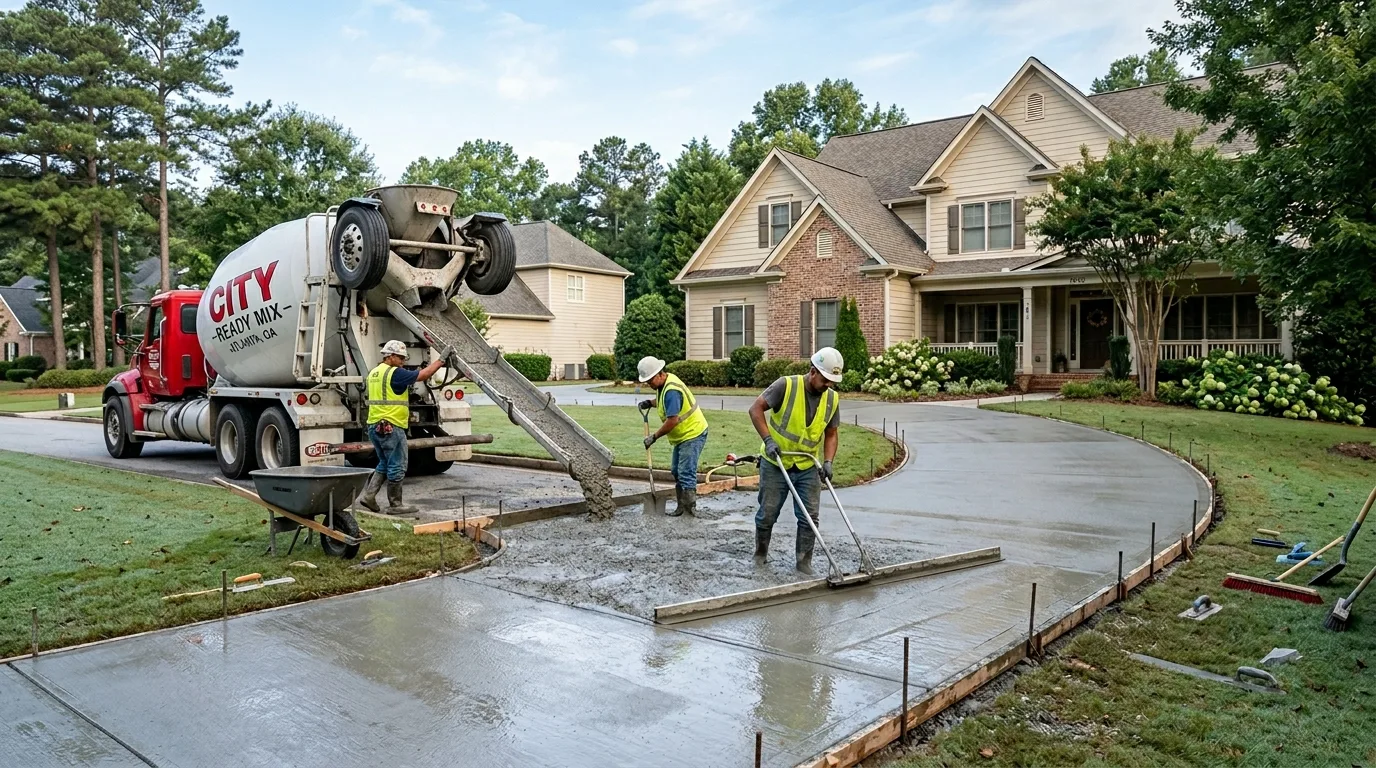
Concrete doesn’t care about your renovation schedule — it cures at the rate Georgia’s climate allows, and if the temperature or moisture conditions aren’t right when you pour, you’ll see the results in the finished slab for the next twenty years. Alpharetta’s climate creates distinct seasonal windows for concrete work, and knowing them before you schedule your project can save you significant money and frustration.
In this post, we cover Alpharetta’s climate pattern month by month, identify the optimal windows for concrete driveways, patios, and slabs, and explain what happens when you pour outside the ideal range.
Schedule Your Alpharetta Concrete Project
We pour concrete on your timeline with proper planning for Alpharetta's climate. Call (888) 376-0955.
Why Timing Matters for Concrete in Alpharetta
Concrete’s strength comes from a chemical reaction between cement and water called hydration. This reaction proceeds at a rate that depends heavily on temperature: too cold and it slows or stops, too hot and it speeds up while drying the surface faster than the interior can hydrate, creating surface cracks. Alpharetta’s climate creates both extremes — summer heat above 88°F and winter temperatures that regularly drop below 40°F.
The concrete poured in Alpharetta’s expansive red clay soil faces an additional timing consideration: the clay’s moisture content at the time of pour affects how the sub-base behaves during construction and in the immediate weeks following. Pouring concrete on clay that’s saturated from spring rains risks sub-base instability during construction. Pouring on clay that’s severely contracted from summer drought can result in sub-base settlement when rains return.
Month-by-Month Concrete Timing Guide for Alpharetta
January and February — Avoid for major projects. Alpharetta’s January average low is 29°F, and both months regularly see overnight temperatures below freezing. Concrete poured when temperatures drop below 40°F during or shortly after the pour requires cold-weather protection measures — heated enclosures, insulating blankets, or accelerant additives — that add cost and complexity without guaranteeing ideal cure quality. Small repairs can be done with appropriate precautions, but new slabs are better scheduled elsewhere in the year.
March — Caution. March is Alpharetta’s wettest month, averaging more rainfall than any other. While temperatures are rising toward the comfortable range (average high 62°F), the rain frequency makes scheduling outdoor concrete work unpredictable. Rain during or immediately after a pour can damage the concrete surface, wash out sealer, and complicate curing. Late March pours are more workable than early March if the forecast cooperates.
April and May — Prime window. This is Alpharetta’s best concrete season. Temperatures average between 53°F and 78°F highs, rainfall decreases from March’s peak, and humidity is manageable. The concrete cures at its ideal rate, and scheduling is more reliable than in any other part of the year. If you’re planning a concrete driveway or patio in Alpharetta, April and May are the months to target.
June through August — Challenging. Alpharetta’s summer is genuinely difficult for concrete work. July average highs reach 88°F with humidity that makes Georgia summers feel significantly hotter. The combination accelerates surface moisture evaporation before the concrete has properly hydrated, causing plastic shrinkage cracks on the surface that appear within hours of the pour. We can pour in summer with early morning scheduling (before 8 AM), curing compounds applied immediately after finishing, and in some cases wet burlap curing — but these precautions add cost and still produce more risk than spring or fall pours.
September and October — Second prime window. Fall is Alpharetta’s second ideal concrete season. Temperatures moderate from summer extremes, rainfall decreases from the summer thunderstorm pattern, and conditions stabilize for consecutive dry days that outdoor concrete work requires. October is actually one of Alpharetta’s driest months — an excellent window for any concrete project.
November — Generally workable. Early November in Alpharetta still offers acceptable temperatures for concrete pours. As the month progresses, overnight temperatures begin approaching the caution range for concrete work. Scheduling in the first two weeks of November is significantly more reliable than late November when early cold snaps are possible.
December — Use caution. Temperatures become unreliable for concrete in December. Some December weeks in Alpharetta have perfect concrete weather; others bring freezing overnight temperatures that require cold-weather protection. Only proceed with good forecast confidence for the 48 hours following the pour.
Practical Uses: Matching Your Project to the Right Season
Concrete driveway replacement. Driveways are large pours that need good weather for the full construction sequence: demo, sub-base prep, forming, pour, and curing. April through May and September through October provide the most reliable scheduling windows. Book early for spring — Alpharetta concrete contractors fill up for the prime spring window quickly.
Stamped concrete patio. Stamped concrete is the most temperature-sensitive concrete application because the timing window for impressing the pattern into the plastic concrete is narrow, and heat makes it even narrower. Spring and early fall are strongly recommended. Avoid summer stamped concrete pours if at all possible.
Concrete slab foundations. New construction schedules may not always allow for seasonal optimization, but when possible, aim for spring or fall pours. Foundation slabs are large pours where even cure quality matters for the slab’s long-term performance — the uniform hydration that mild weather provides is meaningful for foundation work.
Concrete repair and crack filling. Minor concrete repair can be done year-round with appropriate material selection. Repair mortars and epoxy crack fillers have different acceptable temperature ranges, and we match the material to the ambient conditions. Major resurfacing is better reserved for fall’s dry season.
Book Your Fall or Spring Alpharetta Concrete Project
Alpharetta Concrete Contractors schedules around Georgia's climate. Call (888) 376-0955 to reserve your spot.
What Affects Concrete Quality When Timing Isn’t Ideal
Summer heat mitigation. Early morning pours, curing compounds applied within minutes of finishing, and wet burlap curing over the surface for five to seven days can produce acceptable results in summer. These measures add to project cost but are available when scheduling flexibility doesn’t allow waiting for fall.
Winter cold protection. Concrete poured below 40°F ambient temperature requires one of three approaches: heated enclosures that maintain temperature around the fresh concrete, insulated curing blankets that hold warmth from the pour’s initial hydration heat, or accelerant admixtures that speed the hydration reaction. All three options add cost. Concrete poured in temperatures that weren’t adequately protected may develop low strength or surface crazing.
Rain events. Rain that hits fresh concrete before the surface has set can damage the finish — pitting, diluting the surface, or washing out cement paste. We check forecasts carefully before scheduling pours and have rescheduling policies for rain events. A light drizzle after the concrete has taken initial set is less damaging than any rain during the pour itself.
Frequently Asked Questions
When is the best time to pour concrete in Alpharetta GA?
April through May and September through October are Alpharetta’s best concrete months. Temperatures between 55–75°F and reduced rainfall compared to March and Georgia’s summer thunderstorm season make these windows the most reliable for quality results. If you’re planning a concrete driveway or patio, these are the months to target.
Can you pour concrete in the winter in Alpharetta?
Yes, with appropriate cold-weather precautions. When overnight temperatures drop below 40°F, concrete must be protected during and after the pour using insulating blankets, heated enclosures, or accelerant admixtures. We evaluate each project’s winter pour requirements individually based on the forecast. See our concrete slab foundation page for how we handle timing for larger structural pours.
Does summer heat affect concrete driveway quality?
Alpharetta’s summer heat above 85°F increases the risk of plastic shrinkage cracking — surface cracks that appear within hours of the pour as the surface dries faster than the interior hydrates. We mitigate this with early morning pours, curing compounds, and wet curing, but spring and fall remain the preferred seasons for new driveway installation. Learn more about concrete driveway costs in Alpharetta for complete project planning information.
Schedule Your Alpharetta Concrete Project for the Best Season
Call Alpharetta Concrete Contractors at (888) 376-0955. We book prime spring and fall slots early.
Related: