
Alpharetta Concrete Foundation Repair vs. Replacement Guide
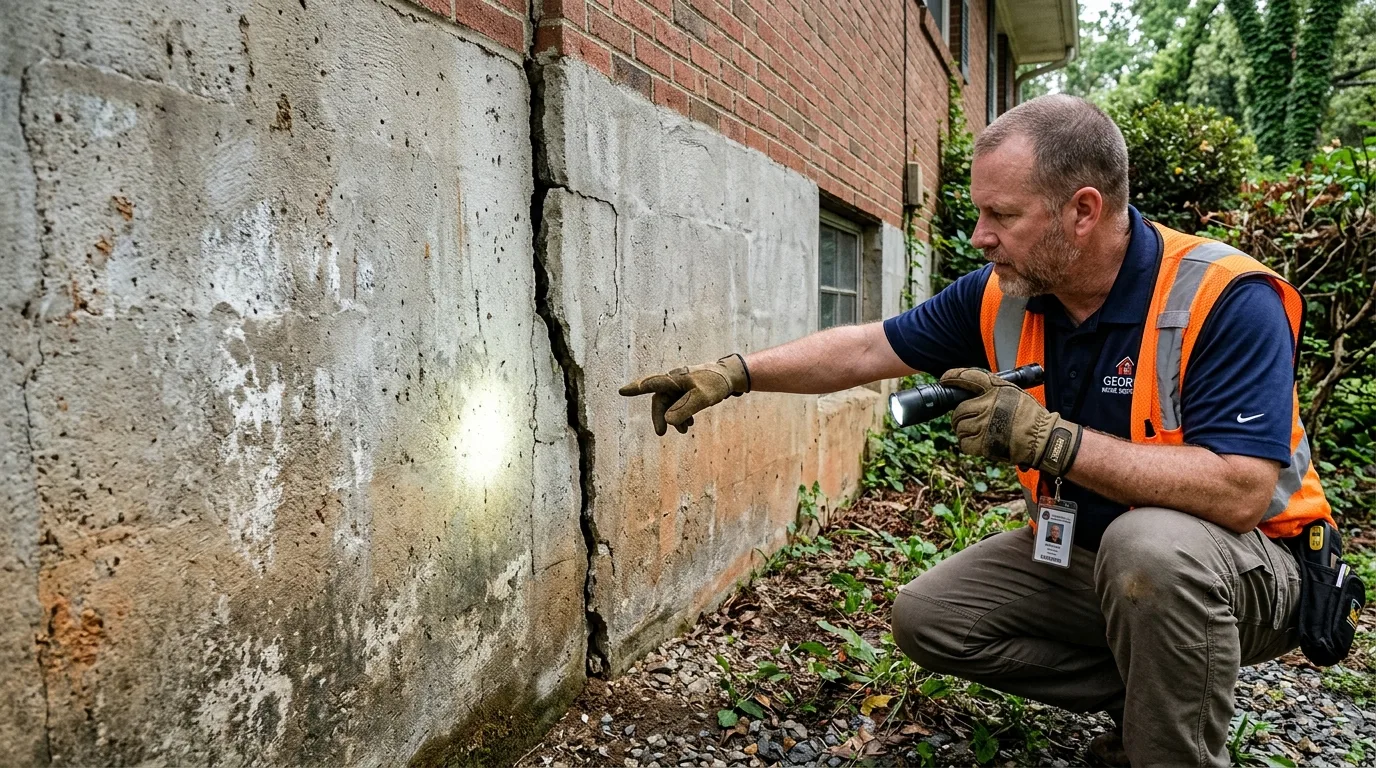
Foundation problems in Alpharetta rarely appear as dramatic failures — a crack in the slab, a door that started sticking last spring, a gap that appeared at the corner where the wall meets the ceiling. These subtle signs are easy to dismiss or attribute to normal settling. But in Fulton County’s clay soil environment, these are often early indicators of a foundation issue that will worsen predictably if not addressed.
In this post, we cover the specific signs of concrete slab foundation distress in Alpharetta, how to tell whether you need repair or full replacement, and how Georgia’s expansive red clay creates the conditions that drive foundation problems in this market.
Foundation Concrete Assessment in Alpharetta
Honest evaluation of your slab's condition. Call (888) 376-0955 for a free site visit.
Why Alpharetta Has More Foundation Problems Than You Might Expect
Georgia’s red clay — the dominant soil type throughout Fulton County — has one of the highest shrink-swell potentials of any soil type in the Southeast. When Alpharetta’s frequent rainfall saturates the clay, it expands. When Georgia’s dry periods and winter months reduce moisture content, the clay contracts. The magnitude of this volumetric change in active clay can be 10–15% or more — a significant force applied cyclically against the bottom of any concrete slab sitting on it.
Foundation slab damage in Alpharetta’s communities — including areas near Wills Park and throughout the Windward subdivision — follows a recognizable pattern: early signs of differential settlement appear within five to fifteen years of construction if the original slab wasn’t designed to account for clay movement. Homes built in Alpharetta’s development boom of the 1980s and 1990s are now reaching the age where those original foundation decisions are showing themselves clearly.
Signs of Concrete Foundation Distress in Alpharetta
Sticking interior doors. Doors that previously swung freely but now bind at the top or bottom — particularly in the same season each year — are often responding to foundation movement. If the sticking correlates with wet or dry periods, clay movement beneath the foundation is the likely cause.
Floor cracks in tile or hardwood. Cracks in tile grout lines or actual tile, cracks appearing in hardwood floor boards, or separation between floor and baseboard are all signs of slab movement. These often appear first in the areas of highest movement — interior zones where clay moisture content changes most dramatically.
Wall cracks at corners. Diagonal cracks running from door or window corners toward the ceiling, or stair-step cracking in brick veneer, indicate differential settlement in the foundation below those areas.
Gap at wall-floor or wall-ceiling junction. A gap appearing between the baseboard and the floor, or between the crown molding and the ceiling, indicates the structure is racking — the walls are moving relative to the floor and ceiling as the foundation settles.
Visible slab crack visible from interior. In some homes, slab cracks become visible through flooring — a line appearing in tile grout or hardwood that corresponds to a crack in the slab beneath. This is late-stage evidence that the slab itself has cracked.
Repair Options for Concrete Slab Foundations in Alpharetta
Polyurethane foam lifting. For slabs where sections have settled uniformly (one area down, not differential movement across the same section), polyurethane foam injection lifts the slab back to grade. This is faster and less invasive than mudjacking, and the lighter foam reduces the load on the clay sub-base. Effective for garage floor sections, porch slabs, and areas outside the main living space where uniform settlement has occurred.
Mudjacking (grout injection). Pumping a cement-soil slurry beneath the slab to fill voids and lift sunken sections. Effective for larger-area settlement but adds weight to the sub-base, which can re-settle in Alpharetta’s active clay environment. Better suited to more stable soils than mudjacking in high-clay environments.
Interior and exterior drainage correction. Many Alpharetta foundation problems are driven or worsened by drainage that directs water toward the foundation. Correcting drainage — regrading soil, extending downspouts, installing French drains — reduces the moisture swings that drive clay movement. This is a preventive and supportive measure, not a standalone repair for existing foundation damage, but it’s essential as part of any repair plan.
Full slab replacement. When cracking is through-the-slab, settlement is differential and severe, or the slab is structurally compromised beyond what repair can address, replacement is the correct answer. Full slab replacement in Alpharetta requires excavation of the failed slab and — critically — soil engineering to address the clay conditions that caused the original failure. A replacement slab poured on the same unaddressed clay will repeat the failure cycle.
Practical Uses: Foundation Decisions for Different Scenarios
Garage floor with uniform settlement. A garage floor in the Alpharetta area that has settled two to three inches uniformly across the front section is a good candidate for polyurethane foam lifting. The garage slab is separate from the living space foundation, the settlement pattern is regular, and lifting plus drainage correction can produce lasting results.
Living space with sticking doors and minor floor cracks. This pattern warrants a thorough foundation assessment before committing to any repair approach. The extent of the underlying clay movement and the degree of slab cracking beneath the floor need to be understood before recommending lifting versus replacement versus drainage correction only.
Home in Windward or Glen Abbey with stair-step brick cracking and significant door binding. This pattern suggests the clay movement has progressed sufficiently to cause structural racking — the foundation has moved differentially enough to distort the structure above it. This scenario warrants an engineering assessment of the slab before any work begins.
Foundation Concrete Evaluation in Alpharetta, GA
Call (888) 376-0955 for a site assessment. We'll give you an honest picture of your foundation's condition.
What Affects Foundation Repair Cost in Alpharetta
Foundation repair costs in Alpharetta range widely depending on the repair approach. Polyurethane foam lifting for a settled garage slab runs $800–$2,500. Interior drainage correction runs $2,000–$8,000 depending on scope. Full slab replacement for a partial section of a living space slab (requiring interior demolition of flooring and finished surfaces) is priced on a project-specific basis and typically falls in the $15,000–$40,000 range when finish restoration is included.
Concrete slab foundation work in Alpharetta costs $5–$11 per square foot for the structural concrete component. What makes foundation work more expensive than other concrete services is the combination of site complexity, finish restoration, and the need to address the clay soil engineering that caused the original failure. Projects that skip the soil engineering step to reduce upfront cost create the conditions for the same failure cycle to repeat.
Frequently Asked Questions
How do I know if my Alpharetta home has foundation problems?
The most reliable early indicators are sticking interior doors (especially seasonal sticking), diagonal cracks at door and window corners, cracks in tile grout lines, and gaps appearing at wall-floor or wall-ceiling junctions. These signs in Fulton County’s clay soil environment are often early-stage clay movement evidence, not just cosmetic issues. An in-person assessment by a concrete professional who understands Alpharetta’s soil conditions is the right next step if you’re seeing multiple signs. See our concrete slab foundation page for more on how we assess slab conditions.
Is foundation settlement in Alpharetta always a sign of a serious problem?
Not always — minor settlement is normal in any clay soil environment over time. The questions are the rate of settlement, the pattern (uniform versus differential), and whether active movement is still occurring or has stabilized. A foundation that settled an inch over thirty years and hasn’t moved since is different from a foundation settling a half-inch in the last two years. Rate and progression matter more than total settlement amount.
What is the difference between concrete repair and foundation repair?
Concrete repair addresses surface damage — cracks, spalling, and surface deterioration. Foundation repair addresses movement of the slab itself, which involves either lifting settled sections, stabilizing the sub-base, or replacing the structural concrete. Both can overlap when foundation movement has caused cracking that also needs surface repair. Read our concrete repair guide for information on surface repair services.
Concrete Foundation Help in Alpharetta
Call Alpharetta Concrete Contractors at (888) 376-0955. Serving Alpharetta, Milton, Johns Creek, and Fulton County.
Related: